







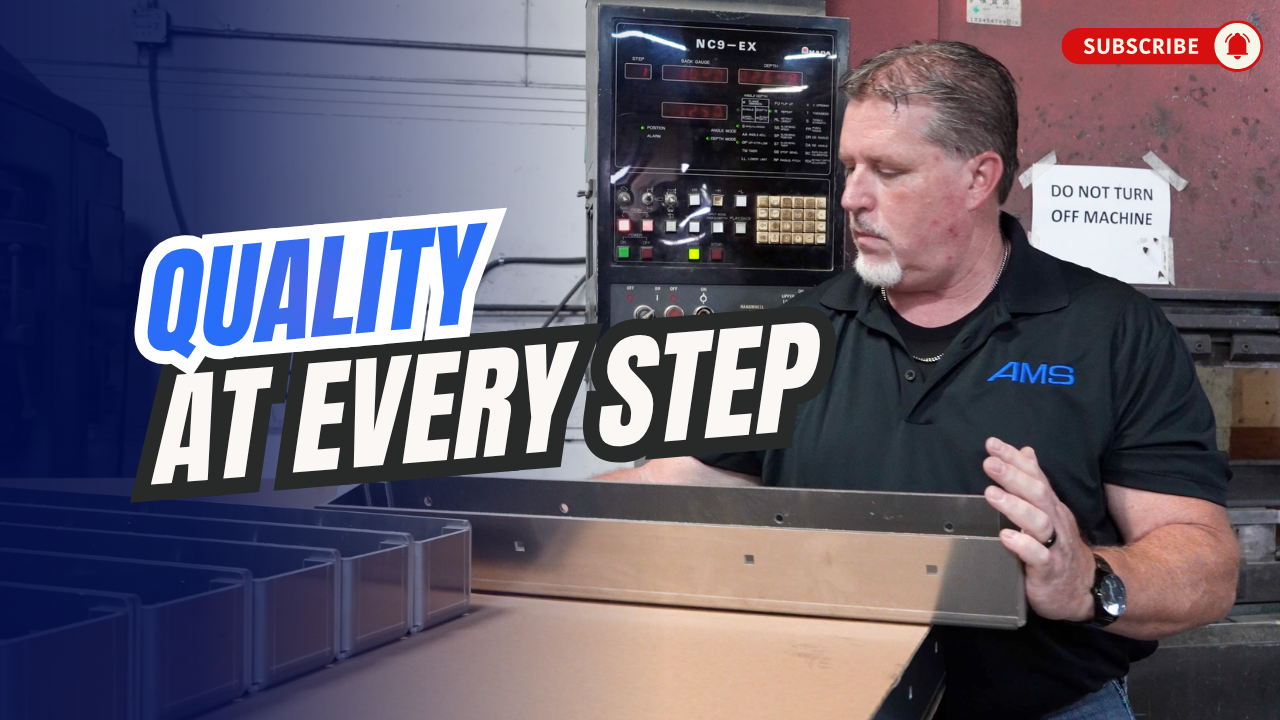
What to Include in a Metal Fabrication RFQ
Before you compare two metal fabrication quotes, ask whether they price the same finished part.
A bare steel bracket is a different scope from a powder-coated bracket with hardware installed, inspection records included, and protective packaging. An RFQ that says “500 brackets, see attached” leaves too much of that scope open to interpretation.
For purchasing teams using November to prepare for early 2027 production, this is the time to settle those details. Which drawing is approved? Are you requesting a prototype or releasing a production order? When do the parts actually need to arrive?
At Accurate Metal Stamping (AMS), our metal fabrication services include laser cutting, forming, machining, welding, powder coating, assembly, and packaging. A useful request for quote explains which capabilities your project needs and what you expect to receive when the work is complete.
The goal is not to create more paperwork. It is to give the estimating team enough information to quote the work you actually need.
What Should a Metal Fabrication RFQ Include?
A metal fabrication RFQ, or request for quote, asks a supplier to price a defined manufacturing requirement. It should identify the parts or services being requested, the required delivery dates, and the conditions the supplier needs to meet.
For custom metal fabrication, prepare current drawings, material specifications, order quantities, critical tolerances, fabrication and finishing requirements, inspection expectations, and delivery instructions. Identify any requirements that are still under review, and provide a contact who can resolve technical questions.
Use the following sections to build that package.

1. Start With Current Drawings and Clear Revision Information
Send the design you intend to buy, not a collection of files that someone must sort through to find the latest version.
Identify each part by its part number and revision. Confirm that the drawing, model, bill of materials, and written RFQ all describe the same design. Engineering documentation needs to stay consistent when designs change, including updates shared between drawings and models.
Provide a readable drawing and available CAD files, then confirm which formats the supplier prefers. Do not assume a model containing geometry alone also communicates every tolerance, material requirement, or surface finish note. Those requirements belong in the approved drawing or appropriately annotated model.
For formed sheet metal, show the finished geometry clearly. Include supporting flat patterns when available, but clarify who will validate the forming details.
Also identify the design’s status. A file issued for budget pricing is not necessarily ready for production. If engineering is still revising the mounting pattern or evaluating a different material, say so.
Resolve before submitting: Which revision should the supplier quote, and which decisions remain open?

2. Specify the Material Beyond “Steel” or “Aluminum”
Your RFQ should identify the required material grade, thickness, and any applicable material specification. Include the condition or temper when relevant, and clearly state the units used.
“Aluminum panel” may describe the general product, but it does not tell the supplier which material your engineering team has approved.
For a sheet metal fabrication quote, include the nominal thickness in inches or millimeters rather than relying only on a gauge description. Where material certification or traceability is required, identify that requirement in the RFQ.
Then address substitutions. Are equivalent materials acceptable? Can the supplier suggest an alternative, or must the specified grade be used without exception?
Keep recommendations separate from approvals. You can invite material suggestions without authorizing a change to the design. Require engineering approval before an alternative becomes part of the production scope.
Explain the application when it helps clarify the requirement. A decorative indoor cover and a component exposed to outdoor conditions should not be described as though appearance is their only concern.

3. Separate Prototype Quantities, Production Releases, and Forecasts
Tell the supplier how many parts you need now, not just how many you might purchase over a year.
Consider an illustrative program with five prototype parts, an initial production release of 250, and a forecast of 2,000 annually. Those figures describe three different purchasing needs. Combining them into “annual quantity: 2,000” does not explain what the first quote should cover.
Ask for separate pricing when you need to evaluate different release quantities. For example, request prices for 100, 250, and 500 pieces, with any setup or tooling charges identified separately.
For assemblies, specify both the number of finished assemblies and the quantity of each component per assembly. An order for 100 enclosures may require more than 100 brackets, panels, or mounting plates.
Be clear about which quantities are forecasts and which are planned releases. If recurring production is expected, describe the anticipated ordering pattern without presenting unapproved demand as a firm commitment.
Resolve before submitting: What should be quoted for the first order, and what future volume should be considered separately?

4. Identify the Dimensions That Control Fit and Function
“Hold tight tolerances” is not a complete manufacturing instruction.
Your drawings should define the acceptable variation and the reference features used to evaluate the part. Geometric dimensioning and tolerancing provides a standardized way to communicate requirements related to form, fit, function, and interchangeability.
Explain which features deserve particular attention. On a mounting bracket, that might be the relationship between the bolt pattern and the mounting surface. On an enclosure, it might be the alignment between a panel and the frame it attaches to.
The objective is not to apply the tightest possible tolerance everywhere. Overly restrictive requirements can add manufacturing cost without improving function. Any proposed tolerance change should be reviewed and approved by the responsible engineer.
Also clarify whether critical dimensions apply before or after finishing. Where coating, installed hardware, or assembly affects acceptance, make that condition explicit.
Provide relevant mating information when available, but do not use a sample or assembly photo as a substitute for controlled requirements. The supplier needs a clear definition of an acceptable part, not just a general impression of how it should fit

5. Define Where Fabrication Ends and Assembly Begins
A quote for individual components is not the same as a quote for an assembled product.
State whether the supplier should deliver cut blanks, formed parts, welded assemblies, finished components, or completed assemblies. Identify any hardware that must be included and who is responsible for supplying it.
For example, a formed cover may also require threaded inserts, hinges, latches, or mounting hardware. Specify the hardware part numbers, quantities, and installation locations. Where welding requirements affect function or appearance, identify the required locations and details rather than leaving them to interpretation. Hardware and weld information are important elements of a complete fabrication definition.
Include an assembly drawing and bill of materials when multiple components are involved. Clarify whether the supplier is expected to assemble everything or provide a kit for your production team.
This section should answer a simple receiving question: What work should already be finished when we open the shipment?

6. Describe the Finish Beyond Its Color
“Powder coat black” leaves several decisions unresolved.
When requesting powder coating services, identify the approved color reference, gloss, texture, and coating specification where applicable. Explain the intended environment and any required performance criteria. Powder coating products can differ in appearance, film thickness requirements, and tested performance, so color alone does not define the finish.
Mark the surfaces that must remain uncoated. These may include specified threads, mating surfaces, or designated electrical contact locations. Discuss masking and acceptable hanging locations during quoting rather than treating them as details to settle after fabrication. The Powder Coating Institute identifies hanging and masking as important processes affecting coating quality and efficiency.
For visible components, describe the appearance standard. Which surfaces will the customer see? Is an approved sample available? Are minor handling marks acceptable on hidden surfaces but not on an exposed face?
Avoid instructions such as “match the last order” unless you also identify the approved finish specification or reference sample. Give the supplier something that can be reviewed and agreed upon.
For other finishes, apply the same discipline: specify the process, required condition, protected areas, and acceptance criteria.

7. State Inspection and Documentation Requirements Up Front
Ask your quality team what it needs before the RFQ goes out.
Start with the features that require verification and how acceptance will be determined. Clear dimensions, tolerances, and reference features give manufacturing and inspection teams a common basis for evaluating the work.
Then identify the documentation you expect to receive. Depending on the project, you may require material certificates, recorded dimensional results, coating documentation, weld inspection records, or a certificate of conformance. Request confirmation that the supplier can provide the specific documentation and inspection coverage you need.
Be precise about first part approval. Does your team need to review a sample before the remaining production quantity is manufactured? Is a recorded inspection report required, or is the approval based on your own fit check?
Also distinguish routine first part inspection from a customer requirement for a formal first article package. Define the required report, format, and approval process rather than assuming everyone uses those terms identically.
Resolve before submitting: What evidence will your receiving or quality department require to accept the shipment?

8. Give a Required Arrival Date and Shipping Instructions
“Need these in January” is a planning window, not a delivery requirement.
State the date the parts must arrive at your facility. Separately identify any requested sample date, approval milestone, or production release date. Ask the supplier to confirm the schedule against those requirements.
Clarify what starts the quoted lead time. Is it receipt of the purchase order, approval of final drawings, resolution of technical questions, or another agreed milestone? Also confirm whether the quoted completion date means ready to ship or delivered.
For early 2027 production, ask about year end operating schedules and the deadlines for customer approvals. Do not assume a November quote reserves a January production slot.
Include the delivery location, receiving hours, and any special handling needs. Identify whether parts should be individually protected, grouped by assembly, labeled by part number and revision, or packaged for a specific receiving process.
Request freight pricing separately when that helps comparison. A local supplier and a distant supplier should be evaluated against the same delivery and packaging scope, not just their unit prices.

What Does a Clear RFQ Look Like?
Consider this illustrative cover note for a fabricated panel order:
Please quote five approval samples followed by 500 production panels, part P100, Revision C. The attached drawing, model, material specification, and finish specification are the current documents for this request.
Include forming, the specified installed hardware, powder coating with the marked areas masked, and protective packaging. Quote the requested first part dimensional report separately. Production may proceed only after written sample approval.
The 500 production panels must arrive at our receiving dock by January 25, 2027. Please propose sample and production dates, identify any assumptions or exceptions, and show setup charges and freight separately. Annual demand is currently forecast at 2,000 panels and is not a purchase commitment.
This example is not a replacement for the technical package or a statement of AMS pricing or lead times. It shows how a short cover note can connect the drawings to the actual purchasing requirement.
The supplier can see the design revision, quantities, approval requirement, delivery expectation, and requested quote breakdown without searching through unrelated email threads.

Compare the Scope Before Comparing the Price
When quotes return, review them against the original RFQ.
Check whether each supplier included the same material, finish, hardware, inspection requirements, packaging, and delivery scope. Review exceptions carefully. A supplier may have priced an alternative material, excluded an inspection report, or assumed a different release quantity.
Separate recurring part costs from one time charges. Ask how long the pricing remains valid and whether a design revision would require the quote to be updated.
For example, a lower unit price may exclude hardware installation that your team expected to receive complete. That does not automatically make the quote wrong. It makes the scope different.
Resolve those differences before choosing a supplier. The useful comparison is the price and schedule for the agreed deliverable, not the smallest number on the page.

How AMS Helps Buyers Clarify a Fabrication Project
You do not need every manufacturing decision settled before starting a conversation. You do need to identify what is approved and where you need help.
AMS provides design for manufacturability support, including feedback on geometry, materials, fasteners, and tolerances. Its engineering and purchasing support also emphasizes detailed quoting, realistic lead times based on capacity, and
communication about project scope.
That makes the RFQ stage an opportunity to ask practical questions. Could a feature be produced more efficiently with a different approach? Does the proposed design create an unnecessary fabrication step? Which requirements need clarification before a production quote can be finalized?
For buyers seeking metal fabrication in DFW, AMS brings cutting, forming, machining, welding, powder coating, and assembly capabilities together in one facility. An OEM fabrication partner with that range can discuss the project beyond the first operation and help define what the finished deliverable should include.
Any proposed changes should still go through your approval process before production.

Frequently Asked Questions About Metal Fabrication RFQs
Can I request a quote before my design is finalized?
Start by requesting budget pricing or a manufacturability discussion, and clearly mark the design as preliminary. Identify the assumptions the supplier should use. Before placing a production order, confirm the approved revision and whether the pricing or schedule needs to change.
Should powder coating be included in my fabrication RFQ?
Include it when coated parts are the intended deliverable. Specify the finish requirements, masking locations, and appearance expectations. If you are comparing separate sourcing options, ask for fabrication and finishing to be shown as separate line items.
Do I need to choose every manufacturing process myself?
Identify any processes required by your engineering specifications, but distinguish those requirements from preferences. Ask the supplier to recommend an approach where the design allows flexibility, with any proposed changes subject to your approval.
What should I do when the drawing and CAD model disagree?
Resolve the conflict with the responsible engineer and issue a consistent package. Identify the governing documents and applicable revision rather than asking the supplier to guess which information is correct.
Request a Metal Fabrication Quote From AMS
A strong RFQ makes the buying decision clearer. It tells the supplier what to make, what to include, how the work will be accepted, and when it needs to arrive.
Whether you are planning a prototype, replacing a supplier, or preparing an early 2027 production release, start with the requirements that matter to your product and your team.
Send Accurate Metal Stamping your current drawings, quantities, finishing requirements, and required delivery date to request a metal fabrication quote. Flag any open questions so we can discuss them before they become production assumptions.